
Play Aviator Now!
Home → Strategy
Aviator Strategy
Approaching Aviator sensibly
The developer Spribe released the title Aviator in 2019 as a distinct crash game variant that operates without traditional reels or paylines. This structural difference means players must focus entirely on timing their cashout before the multiplier crashes, which fundamentally changes how one approaches the betting session compared to slots. Understanding this core mechanic is essential for managing expectations and avoiding common pitfalls associated with rapid round endings.
The theoretical return to player stands at 97.00% over a very long run, establishing a house edge of exactly 3.00%. This figure represents the statistical average across millions of rounds rather than a guarantee for any single session or short play period. Players should recognize that the built-in advantage ensures the operator retains funds over time regardless of individual short-term outcomes.
Certification by iTech Labs and BMM Testlabs confirms that the game mechanics function according to the stated mathematical model. The provably fair system uses SHA-256 combining server seeds, client seeds, and nonces to verify each round result independently. This transparency allows users to audit fairness while focusing on the strategic decision of when to secure profits.
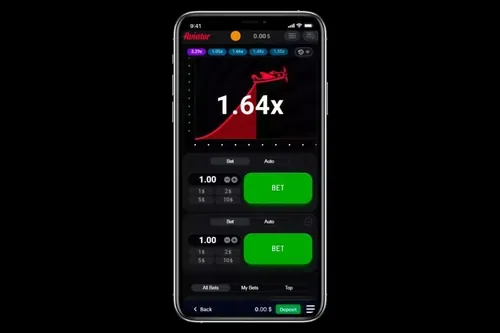
Bankroll rules that hold up
A bankroll represents the specific amount of money set aside exclusively for playing Aviator, separate from personal finances or other gaming budgets. This capital must cover potential losses during extended sessions where the plane might fly away before achieving high multipliers like x1,000,000. Proper allocation prevents emotional decisions that often lead to chasing deficits after consecutive failed cashouts.
Flat betting involves wagering the identical stake amount during every single round, which provides predictable exposure against the 3.00% house edge. This method contrasts sharply with progressive staking strategies that raise bets after losses, as those approaches only accelerate the depletion of the bankroll. Consistent sizing helps maintain control over total expenditure regardless of the volatility inherent in crash games.
The maximum win cap of x1,000,000 defines the upper limit of potential returns but does not influence optimal bankroll management techniques. Players must ensure their initial deposit can withstand the variance required to reach such highs without going bust first. A sustainable approach prioritizes longevity and responsible spending limits over the pursuit of rare, high-multiplier events.
Bet sizing against volatility
Aviator features a dual-bet mode allowing simultaneous wagers, which requires careful calculation of total risk per round relative to the available bankroll. Each bet contributes independently to the overall variance, meaning doubling the number of active bets effectively doubles the rate of fund consumption. Strategic sizing ensures that both positions remain affordable even if the multiplier crashes early in the sequence.
The RTP of 97.00% applies to the aggregate outcome of all bets placed, including those made in dual-bet configurations. Since the game lacks paylines, the volatility stems purely from the random timing of the crash point rather than symbol combinations. Smaller individual stakes spread risk more evenly across numerous rounds compared to large singular bets.
Operators may configure lower RTP settings such as 96% or 94%, which increases the house edge and impacts long-term profitability expectations. Larger bet sizes amplify the effect of these margins, making precise calculation of expected loss critical for sustainable play. Adjusting stake amounts based on current balance preserves capital during unfavorable streaks caused by higher edge variations.
Session limits worth setting
Spribe designed Aviator as an instant game where rounds conclude rapidly, encouraging continuous play that can deplete funds faster than traditional casino titles. Setting a strict time limit prevents exhaustion-induced errors that often occur during prolonged exposure to rising multipliers and sudden crashes. Discipline in stopping after a predetermined duration protects both financial resources and mental clarity throughout the session.
The auto cashout feature allows players to predefine a multiplier threshold, removing emotional hesitation during fast-moving rounds with speeds exceeding standard slot spins. Utilizing this tool enforces consistent exit strategies regardless of whether the current trend favors winning or losing positions. Combining auto cashout with fixed session lengths creates a structured environment that mitigates impulsive decision-making risks.
Unlike Dice, which offers adjustable volatility, Aviator maintains a constant risk profile determined by its underlying probability distribution and 97.00% RTP. Session boundaries should account for this consistency by allocating equal time segments for analysis and active betting phases. Regular pauses between rounds help maintain objectivity regarding the effectiveness of current staking methods versus historical performance data.
Why chasing losses fails
Progressive staking systems raise stakes after losses to recover previous deficits, but they do not alter the fundamental 3.00% house edge embedded in Aviator. Increasing bet sizes merely accelerates the rate at which the bankroll diminishes during inevitable downswings common in crash games with high variance. This approach ignores the mathematical reality that past results have no influence on future independent round outcomes.
The maximum win potential of x1,000,000 exists alongside frequent low-multiplier crashes that drain accounts quickly when bets are increased recklessly. Chasing behavior typically leads to placing unsustainable wagers that exceed safe percentage thresholds of the remaining balance. Recognizing that each round starts fresh with identical probabilities discourages reliance on recovery strategies that statistically fail over time.
Certification by BMM Testlabs verifies that the provably fair algorithm generates truly random crash points unaffected by previous round histories or betting patterns. Attempting to predict trends based on recent outcomes contradicts the verified independence of each event in the sequence. Accepting losses as part of the normal variance associated with a 97.00% RTP game promotes healthier long-term engagement habits.
Aviator: key facts
| Parameter | Value |
|---|---|
| Game | Aviator |
| Studio | Spribe |
| Released | 2019 |
| RTP | 97.00% |
| House edge | 3.00% |
| Max win | x1,000,000 |
Common systems and their limits
The theoretical RTP of 97.00% for Aviator by Spribe establishes a baseline house edge of 3.00% over extended play sessions. This percentage remains fixed regardless of the betting strategy employed, meaning no system can alter the mathematical expectation built into the game mechanics. Players relying on pattern recognition or historical data face this unyielding statistical reality every time they place a wager.
Operators may configure alternative RTP settings such as 96% or even 94%, which directly increases the casino's advantage over the player. A reduction from 97.00% to 94% represents a significant shift in long-term expected returns that affects all players equally. Consequently, any claimed winning system fails when confronted with these lower configured rates available at certain online platforms.
The maximum win cap of x1,000,000 defines the absolute upper limit for a single round outcome within the crash mechanic. This ceiling applies universally across all standard configurations unless specific operator terms dictate otherwise for promotional events. Understanding this hard limit prevents unrealistic expectations about potential payouts during high-multiplier rounds involving substantial stakes.
Flat betting explained
Flat betting requires maintaining the exact same stake amount for every single round without variation based on previous outcomes. This approach preserves the bankroll integrity by preventing rapid depletion during losing streaks common in high-volatility crash games like Aviator. The consistency ensures that variance impacts the total balance linearly rather than exponentially through escalating wagers.
Spribe designed Aviator with a 97.00% RTP that assumes long-term averaging across hundreds of thousands of individual rounds played. When using flat bets, the actual return converges toward this theoretical value much more steadily than aggressive staking methods. This stability allows players to monitor their performance against the known house edge of 3.00% accurately.
The provably fair mechanism using SHA-256 seeds guarantees each round result is independent and not influenced by prior cashouts. Flat betting aligns with this independence because past multipliers do not predict future crash points in the rising curve. Players focusing on consistent small wins benefit from reduced emotional stress while adhering to strict budget constraints.
Progressive staking risks
Progressive staking involves raising stakes after losses, a method that fundamentally does not change the built-in house edge of 3.00%. While it may recover previous deficits quickly, it simultaneously shortens the total time until complete bankroll ruin occurs during adverse runs. This mathematical reality holds true regardless of the specific progression system applied to the rising multiplier gameplay.
The maximum possible win of x1,000,000 offers an attractive target but cannot offset the exponential risk created by increasing bet sizes. As stakes grow larger to chase losses, a single crash before cashout results in catastrophic financial damage far exceeding initial plans. The dual-bet mode provides some mitigation but fails to eliminate the core vulnerability inherent in negative progression strategies.
Aviator operates with high volatility characteristics similar to other Spribe titles like Plane Game which also features a 97.00% RTP rating. High volatility amplifies the danger of progressive systems because large swings between wins and crashes happen frequently in short periods. Players must recognize that no betting adjustment can overcome the negative expectation defined by the game's mathematical model.
What the maths actually allows
The 97.00% RTP figure represents a theoretical return calculated over an infinite number of rounds rather than a guaranteed session outcome. This metric indicates that for every 100 units wagered, approximately 97 units are returned to players statistically over very long periods. Short-term sessions will inevitably deviate significantly from this average due to the random nature of the crash point generation.
Certification by iTech Labs and BMM Testlabs verifies that the RNG producing crash points operates within acceptable randomness parameters. These audits confirm the server seed combined with client seeds generates truly unpredictable outcomes for each individual round played. Such verification ensures the stated RTP remains accurate and that no hidden mechanisms favor the operator beyond the declared edge.
The house edge of 3.00% means the casino retains three percent of all money wagered over the lifetime of the game pool. This retention rate is relatively low compared to many traditional slot machines but remains constant regardless of player skill or timing. Understanding this permanent cost helps manage expectations regarding profitability and highlights why sustained winning is mathematically impossible.
Reading variance honestly
Variance in Aviator refers to the fluctuation around the mean RTP of 97.00% caused by the random timing of plane crashes. High variance results in infrequent but potentially large multipliers alongside frequent small crashes that drain balances quickly if not managed. Recognizing this distribution helps players avoid chasing losses during dry spells where no significant multipliers appear for extended periods.
The live bet feed displays real-time actions of other players, providing transparency but offering no predictive value for future round outcomes. Observing others cash out early or late does not influence the independent RNG determining when the current multiplier will stop. Relying on social proof from the multiplayer interface introduces cognitive bias that often leads to suboptimal cashout decisions.
Dual-bet mode allows placing two simultaneous wagers, one with auto-cashout and another left manual, to hedge against immediate crashes. This feature utilizes the game's mechanics to secure partial returns while keeping exposure open for higher multiplier opportunities. However, it doubles the stake per round, effectively accelerating the consumption of the bankroll according to the same 3.00% house edge calculation.
Learning the game in demo first
The Aviator crash game by Spribe features a theoretical RTP of 97.00% based on SHA-256 provably fair algorithms. This stands in contrast to Tower Rush by Galaxsys, which holds an identical RTP of 97.00% but caps its maximum win at only 100x. The higher multiplier potential in Aviator requires understanding how cash-out timing affects long-term returns rather than relying on spin outcomes.
Players must cash out before the plane flies away to secure winnings from the rising multiplier curve during each round. Unlike slots that use reels and paylines, this instant game relies on continuous mathematical progression without physical spinning mechanisms. Familiarity with the dual-bet mode helps users manage risk exposure across two simultaneous wagers per round effectively.
Adjusting stakes to your budget
A flat betting strategy involves wagering the same stake amount every round to minimize variance in bankroll depletion rates. Progressive staking raises stakes after losses, which does not change the built-in edge and only shortens the time to ruin significantly. Users should calculate their total bankroll divided by average rounds per hour to determine sustainable bet sizes for extended sessions.
Recognising a bad session
The house edge remains fixed at 3.00%, meaning the casino retains that percentage of all wagers over a very long run statistically. Operators may configure lower RTP settings such as 96.00% or 94.00%, increasing the actual house edge beyond the standard 3.00%. Players tracking cumulative losses exceeding twenty percent of their initial bankroll within one hour should consider stopping play immediately.
Stopping while ahead
The maximum win cap sits at x1,000,000, representing the highest possible payout multiplier available during any single crash round event. Reaching even ten percent of this limit indicates substantial profit relative to typical small-stake gameplay patterns observed daily. Setting a hard withdrawal threshold prevents giving back accumulated gains due to the inevitable regression toward the mean RTP figure.
Responsible play in practice
Certification by iTech Labs and BMM Testlabs confirms that the random number generation adheres to strict fairness standards for all players. The multiplayer live bet feed allows users to observe others' cash-out decisions, providing social proof of varying strategies in real-time scenarios. Limiting daily deposit amounts ensures that financial harm remains contained regardless of short-term winning streaks or losing runs experienced.
DemoRTP & VolatilityHow to PlayAuto CashoutStrategyBonusesMobileDownload & AppMax WinSimilar GamesReviewFAQSitemap
Aviator 2026